

Maritime Sustainability Research Centre
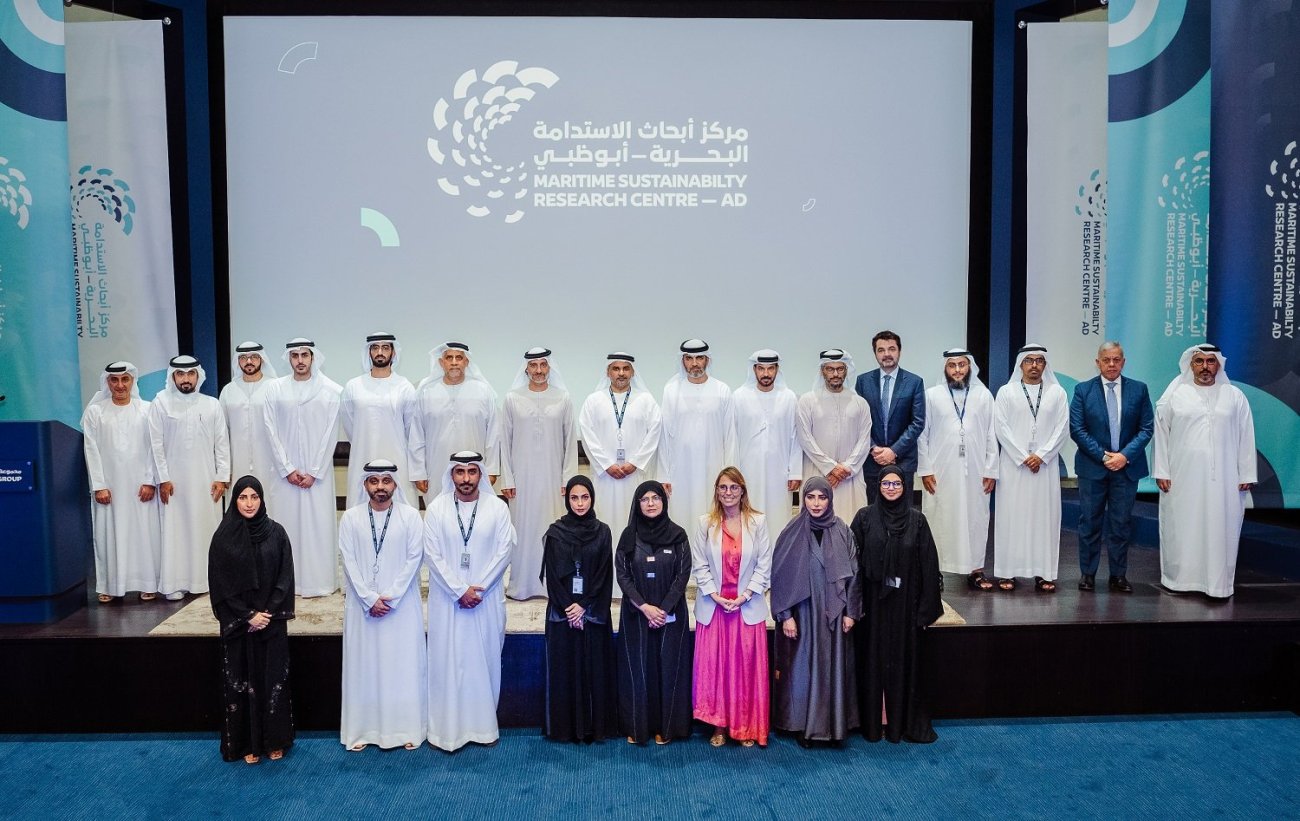
What is Maritime Sustainability Research Centre?
Operated and managed by Abu Dhabi Maritime Academy (ADMA) under the umbrella of Maritime Hub, the Maritime Sustainability Research Centre supports academic institutions and start-ups through applied and fundamental research.
The Centre aims to disseminate knowledge among partners and stakeholders, address short and long-term research needs, and provide research opportunities for graduate students. Areas of focus include the marine environment and sustainability, artificial Intelligence and robotics, maritime cybersecurity, big data, and maritime policies and laws.
Patents and Publications
The study explores the design and optimization of printed circuit heat exchangers (PCHEs) used as precoolers in supercritical carbon dioxide (sCO2) Brayton cycles. The study integrates computational fluid dynamics (CFD), machine learning (ML), and optimization algorithms to improve the thermohydraulic performance of heat exchangers, focusing on reducing pumping power and enhancing efficiency. Read more
The study investigates how oxygen functionalities and clustering affect the transformation of graphite oxide frameworks. The study explores the effects of oxygen clustering on electrical conductivity, thermal decomposition, and nitrogen doping within these frameworks. Techniques like SEM, XRD, and cyclic voltammetry were used to analyze the enhanced redox activity due to confined electron delocalization within graphite oxide materials. Read more
The article focuses on the thermal and fluid flow performance of metallic oxide and carbon-based nanofluids used to enhance cooling in micro-finned heat sinks. It utilizes nanofluids such as Ag, MgO, GNP, and MWCNT in mono and hybrid forms to evaluate the heat transfer coefficient, Nusselt number, and thermal resistance under various pressure drops across the heat sink. The study reveals that using nanofluids significantly enhances cooling efficiency, which is crucial for preventing overheating in modern electronics. Read more
The study presents a novel semi-interpenetrating network sorbent made of poly(pyrrole) doped with a hygroscopic salt and 2D graphene-based nanosheets in an alginate matrix. The material is designed for atmospheric water harvesting (AWH) with an excellent water intake and solar-enabled desorption. The study demonstrates a high water yield and long-term stability over multiple cycles. Read more
The article presents a novel composite material for atmospheric water harvesting (AWH). This material, composed of alginate, graphene oxide (GO), and SAPO-34, exhibits excellent water absorption and solar-driven desorption properties, enabling efficient water capture from humid air. The composite demonstrates strong water uptake and release efficiency, with potential applications in water-scarce regions. Read more
The study focuses on the design and performance optimization of Printed Circuit Heat Exchangers (PCHEs) used in supercritical carbon dioxide (SCO2) Brayton cycles. The study introduces novel heat transfer models and an iterative method to enhance the accuracy of PCHE design, particularly in handling temperature and pressure variations in 2D and 3D scenarios. This advanced modelling approach demonstrates high precision for both standard and non-standard PCHE configurations. Read more
The article investigates the development of hybrid metal-organic frameworks (MOFs) combined with graphene oxide (GO) to enhance carbon dioxide (CO2) capture capabilities. The study focuses on creating robust, moisture-stable adsorbents that can capture CO2 even in humid conditions, making them highly effective for industrial applications. The researchers developed spherical polymer-based beads containing the MOF@GO hybrid materials, which exhibit improved CO2 adsorption capacity and selectivity while maintaining mechanical stability. Read more
The article discusses the development of composite materials made from salt-enriched porous matrices for efficient atmospheric water harvesting (AWH). The study highlights how these Composite of Salt and Porous Matrix (CSPM) materials, incorporating hygroscopic salts such as LiCl and CaCl2, significantly improve water vapor adsorption capacities. The research demonstrates that combining different salts can enhance water uptake and stability, showing great potential for water capture in dry climates. Read more
The article focuses on the technical and economic aspects of pre-cooling systems used in hydrogen refueling stations (HRS) for fuel cell electric vehicles (FCEVs). The study compares double-tube heat exchangers (DTHE) and microchannel heat exchangers (MCHE) for hydrogen pre-cooling, analyzing their thermal and hydraulic performance through simulations and cost models. The research reveals that MCHE outperforms DTHE regarding heat transfer efficiency, reduced material use, and long-term cost savings, particularly in high-volume production. Read more
Superparamagnetic iron oxide nanoparticles (SPIONs) are gaining significance in biomedical applications due to their enhanced functionality. This study introduces a novel approach using a "haircut" reaction to create highly hydrophilic SPIONs with a diameter of ~4 nm, which show improved water dispersibility and selective cytotoxicity against cancer cells. By trimming oleylamine molecules on their surface, the resulting nanoparticles exhibit high functionality. These engineered SPIONs can contribute to the development of advanced nanomaterials for future biomedical systems. Read more
The study focuses on the thermohydraulic characteristics of 3D-printed heat sinks, specifically comparing periodic lattice designs such as simple cubic (SC) and body-centred cubic (BCC) to conventional finned designs. The study evaluates heat transfer coefficients, pressure drops, and performance evaluation criteria (PEC) using water and supercritical carbon dioxide (sCO2) as coolants through numerical simulations. The results show that 3D-printed lattice structures outperform conventional finned designs regarding thermal performance and reduced pressure drops, making them ideal for compact, efficient cooling systems. Read more
The article explores the optimization of the geometric design of rotating packed beds (RPBs) to improve their hydraulic performance in industrial processes such as CO2 capture. By utilizing computational fluid dynamics (CFD) and porous media modelling, the study proposes novel geometries to reduce pressure drop and enhance efficiency in RPBs. The results show significant improvements, with reductions in pressure drops of up to 33%, leading to more cost-effective and efficient CO2 capture solutions.
In the maritime industry, such advancements could be applied to carbon capture systems on ships, helping the sector meet strict emissions regulations set by the International Maritime Organization (IMO) by reducing carbon dioxide emissions during voyages. Read more
The article comprehensively reviews hybridized metal-organic framework (MOF) materials for carbon dioxide (CO2) capture. The study explores the integration of MOFs with various materials, including carbon-based structures, silica, and other additives, to enhance their adsorption capacity, stability, and scalability for industrial applications. The article reviews different synthesis methods, performance comparisons, and the economic feasibility of scaling these technologies for CO2 capture.
In the context of the maritime industry, such hybrid MOF materials could play a crucial role in developing carbon capture systems onboard ships or in coastal facilities. These advanced materials help reduce CO2 emissions, which aligns with the International Maritime Organization's (IMO) goals for lowering the maritime industry's carbon footprint. Read more
Research on cooling electronic devices, such as workstations and servers, is advancing rapidly due to the high heat fluxes generated by compact components and increased power consumption. This study focuses on enhancing the thermohydraulic performance of a mini-channel heat removal system using machine learning-based optimization. Various design parameters like Reynolds number, fin thickness, spacing, and height are optimized using 3D-RANS simulations and trained machine learning models. A deep neural network, integrated with a genetic algorithm, predicts the optimal heat sink geometry, achieving a 2.1-fold improvement in performance, with a 14% higher heat transfer coefficient and a fivefold reduction in pressure drop.
In the maritime industry, such advancements can be applied to optimize cooling systems in ship electronics, improving energy efficiency, reducing heat-related failures, and enhancing the overall performance of marine vessels' onboard systems. Read more
The attached article investigates the optimization of C-shaped printed circuit heat exchangers (PCHEs) in the context of supercritical carbon dioxide (sCO2) Brayton cycles. The study utilizes machine learning (ML) algorithms combined with computational fluid dynamics (CFD) and a multi-objective genetic algorithm (MOGA) to optimize the channel geometries for enhanced thermal and hydraulic performance. The findings demonstrate significant improvements in heat transfer efficiency and reduced pressure drops, particularly for the optimized C-shaped channel design.
In the maritime industry, this research has practical implications for improving the efficiency of heat exchangers used in onboard systems for propulsion and power generation. The enhanced PCHE design can help ships improve their energy efficiency, reduce fuel consumption, and meet stringent emissions regulations, contributing to more sustainable maritime operations. Read more
The article focuses on the thermohydraulic performance of mini-channel heat sinks using three different coolants: supercritical carbon dioxide (sCO2), water, and an Al2O3 nanofluid. The study evaluates the overall heat transfer coefficient and pressure drop across various fin configurations and mass flow rates. The results reveal that sCO2 demonstrates superior performance, with higher heat transfer and lower pressure drop compared to water and nanofluid, making it an optimal choice for high-efficiency cooling applications.
In the maritime industry, these findings are particularly relevant for enhancing thermal management systems in onboard electronics and power generation systems, where efficient cooling is crucial to maintain performance and reduce the risk of overheating during operations. Read more
Optimization of Induced Steam Residual Moisture Content in a Clothing Conditioner Based on a Genetic Algorithm" focuses on the modeling and optimization of heat and moisture transfer in a clothes-conditioning unit (CCU). The study uses a two-phase Eulerian–Eulerian model to simulate air and steam flow through porous media, represented by towels, and optimizes the flow distribution using a genetic algorithm. By varying design parameters such as the air grill and steam nozzle angles, the researchers were able to identify the optimal configuration for achieving improved moisture distribution in the clothes. Read more
The attached article titled "The Effect of Nodalization Schemes on the Stability Characteristics of Three Heated Channels under Supercritical Flow Condition" investigates the thermal-hydraulic stability of supercritical fluids in a system of three parallel heated channels. By applying different nodalization schemes, the study analyzes flow instabilities, such as density wave oscillations, using a bifurcation approach. The authors divided the heated channels into multiple regions (nodes) and conducted simulations to examine the flow dynamics under various operating conditions.
In the maritime industry, this research is relevant for improving the design and safety of energy systems, particularly those involving supercritical fluids, which are increasingly used in ship propulsion and onboard power generation. Understanding the stability characteristics of these fluids can enhance the efficiency and reliability of marine power systems, ensuring optimal performance under various thermal and hydraulic conditions. Read more
The article titled "Aluminophosphate-based adsorbents for atmospheric water generation" reviews the development and performance of aluminophosphate (AlPO) molecular sieves for atmospheric water generation (AWG). The study emphasizes the unique properties of AlPOs, such as high porosity, hydrophilicity, and stability, which make them ideal candidates for water adsorption applications. Various synthesis methods and structural optimizations are explored to enhance water uptake capacities and operational efficiency in arid climates.
In the maritime industry, these materials can be applied to generate fresh water onboard ships or at coastal facilities, providing a sustainable alternative to desalination, which is energy-intensive and can produce harmful brine byproducts. AlPO-based AWG systems could be particularly useful for long voyages or in remote maritime locations, ensuring a reliable supply of potable water. Read more
The article explores the effect of magnesium (Mg) and iron (Fe) substitution on the adsorption properties of microporous aluminophosphate (AlPO4-5) materials. The research focuses on the impact of metal ion incorporation on the crystal structure and water adsorption characteristics of AlPO4-5, a material commonly used in catalysis and adsorption processes. The study finds that Mg and Fe substitution enhances the hydrophilicity of the material and increases water uptake, making it more efficient for atmospheric water generation and other water sorption applications.
In the maritime industry, these findings could be applied to improving systems that harvest atmospheric water on ships or coastal facilities. Enhanced water adsorption materials like Mg and Fe-substituted AlPO4-5 can provide a sustainable alternative to desalination by generating potable water from air, which is particularly useful in water-scarce maritime environments. Read more
The article explores the design and optimization of radial turbines used in an 8 MW supercritical carbon dioxide (sCO2) Brayton cycle. The research applies a multifaceted approach combining in-house radial turbine design code, computational fluid dynamics (CFD) simulations, deep neural networks (DNN), and a multi-objective genetic algorithm (MOGA) to optimize turbine rotor geometries. The study highlights that turbine performance is most sensitive to design parameters such as speed ratio and inlet flow angle.
In the maritime industry, this research could significantly enhance the efficiency of energy generation systems on ships or offshore platforms, where compact and efficient turbomachinery like sCO2 cycles can optimize power generation. The improved turbine designs can help reduce fuel consumption and emissions, contributing to more sustainable maritime operations. Read more